Course Overview
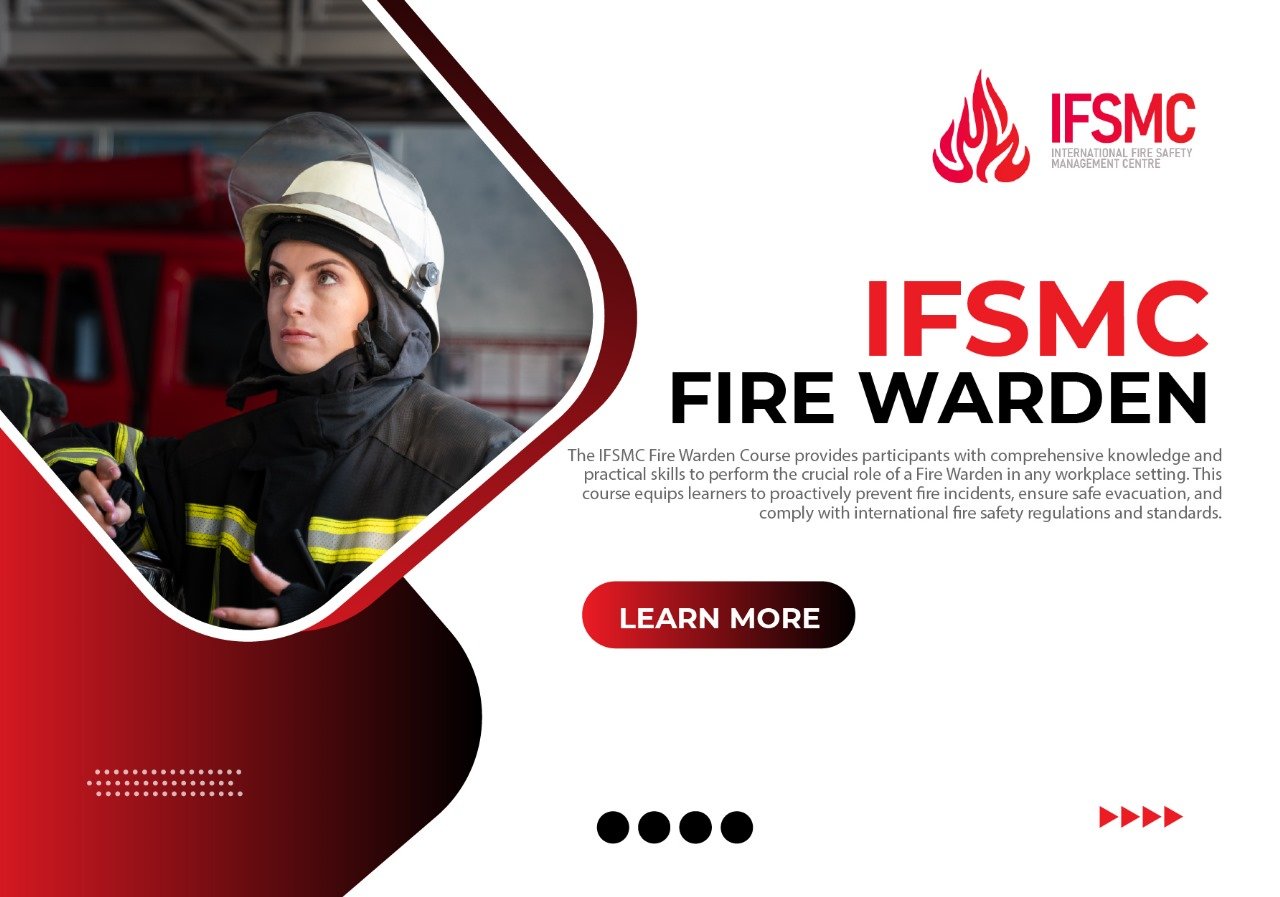
The IFSMC Fire Warden Course provides participants with comprehensive knowledge and practical skills to perform the crucial role of a Fire Warden in any workplace setting. This course equips learners to proactively prevent fire incidents, ensure safe evacuation, and comply with international fire safety regulations and standards.
Delivered by experienced fire safety professionals, this training combines theoretical understanding with hands-on exercises to build confidence and competence in fire emergency management.
Learning Objectives
Upon successful completion of this course, participants will be able to:
- Explain the roles and responsibilities of a Fire Warden.
- Identify common workplace fire hazards and implement control measures.
- Understand fire prevention principles and emergency preparedness.
- Use fire-fighting equipment effectively and safely.
- Coordinate evacuation procedures and assist occupants during an emergency.
- Comply with relevant fire safety legislation and organizational procedures.
Reference
This course is developed in alignment with:
- UK Regulatory Reform (Fire Safety) Order 2005
- NFPA 10: Standard for Portable Fire Extinguishers
- BS 9999: Code of Practice for Fire Safety in the Design, Management, and Use of Buildings
- International Fire Safety Management Best Practices
Course Outline
Introduction to Fire Safety
- Principles of fire and combustion
- Fire triangle and classes of fire
Fire Warden Roles & Responsibilities
- Legal obligations
- Emergency planning and drills
Fire Prevention and Risk Reduction
- Identifying hazards
- Housekeeping and control measures
Fire Detection and Alarm Systems
- Types of detectors and alarms
- Maintenance and testing
Fire-Fighting Equipment
- Types and uses of extinguishers
- Safe operation techniques
Emergency Evacuation Procedures
- Evacuation strategies
- Accounting for occupants
Practical Session
- Fire extinguisher demonstration
- Role-play evacuation drill
Why Choose This Course?
- Aligned with globally recognized fire safety standards.
- Delivered by qualified fire safety trainers with real-world expertise.
- Combines classroom learning with practical exercises.
- Enhances workplace compliance and safety culture.
Who Should Enrol?
This course is ideal for:
- Fire Wardens and Fire Marshals
- Health and Safety Representatives
- Facilities Managers
- Supervisors and Team Leaders
- Any staff responsible for fire safety in their workplace