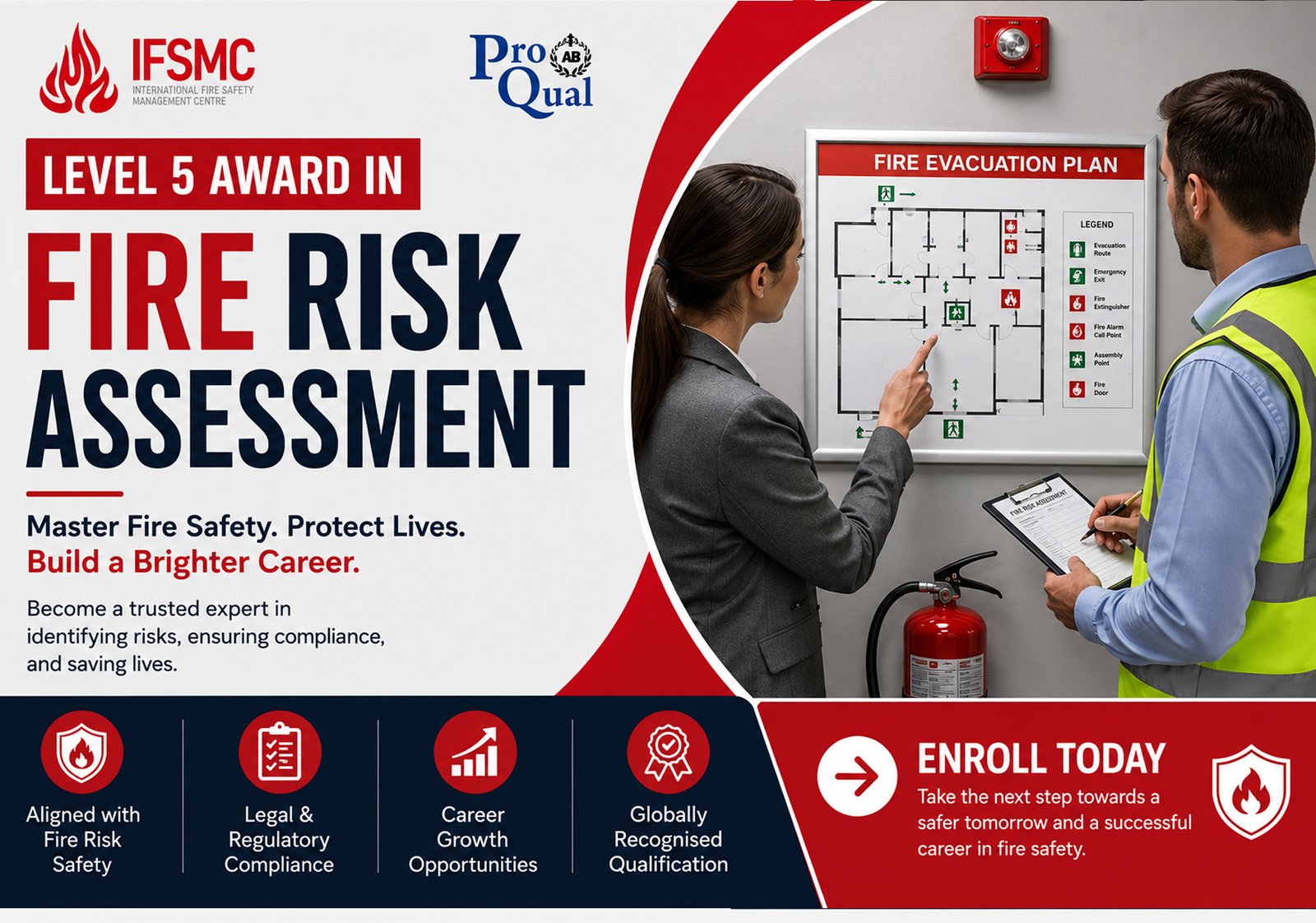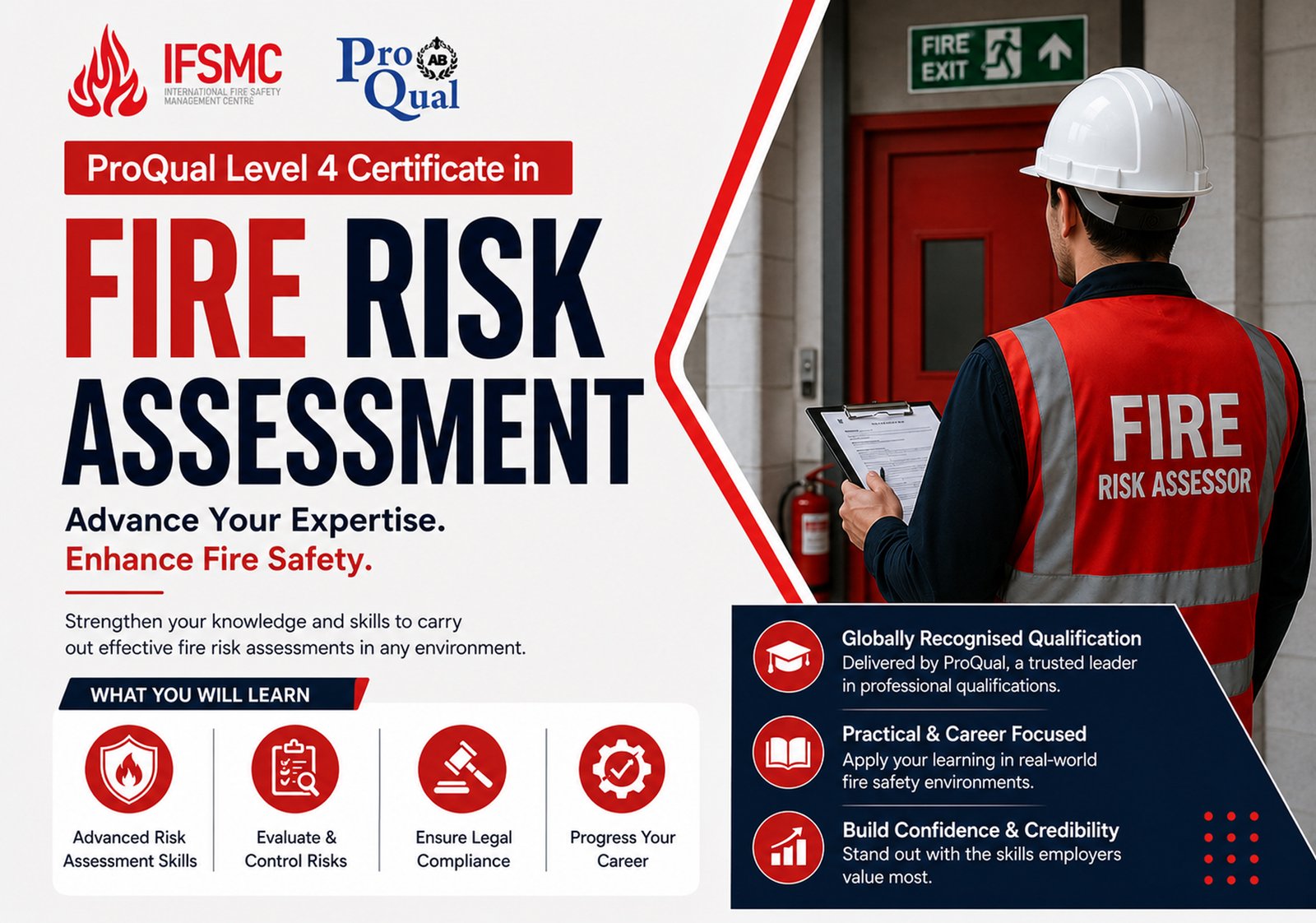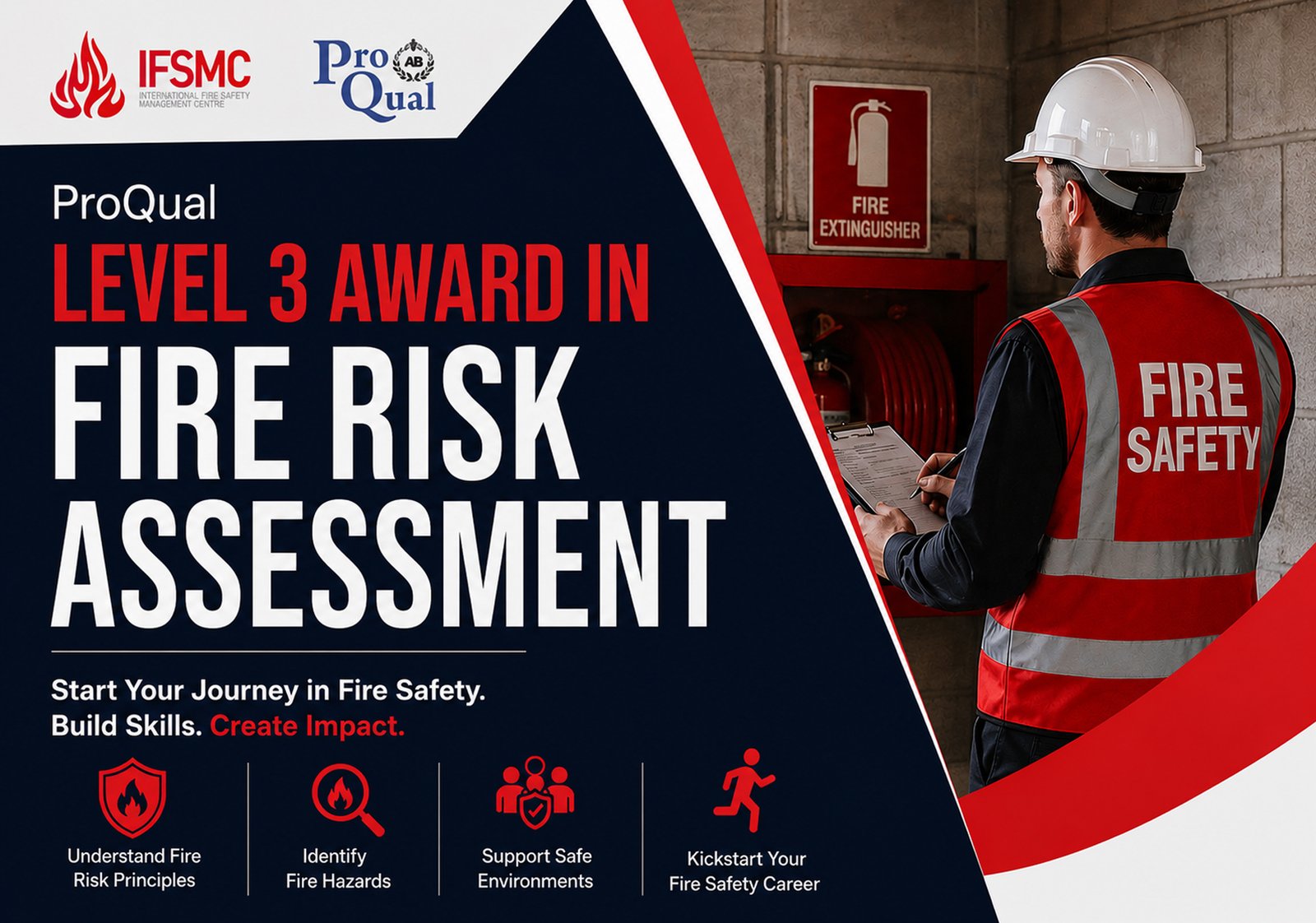
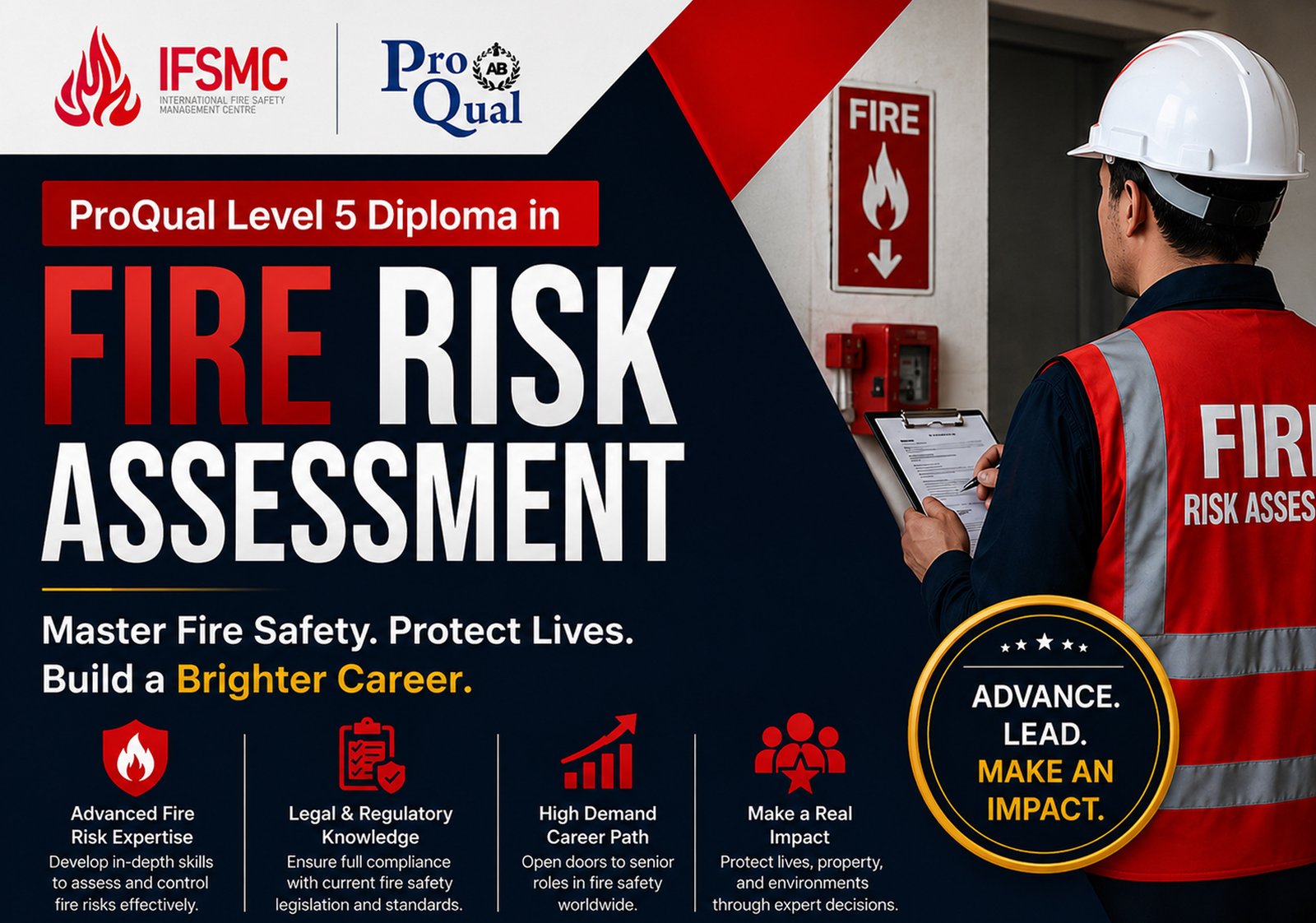
The ProQual Level 5 Diploma in Fire Risk Assessment provide nationally recognised qualifications for those currently working in, or who want to work in the Fire Safety sector.
Aims of Qualification
The aims of the qualification are:
- To build on the Intermediate and Foundation level competencies of fire risk assessment.
- To prepare candidates for leading and undertaking fire risk assessments for high-risk premises.
- To promote and contribute to a culture of continuous personal development and sharing best practice in the field of fire risk assessment.
The awarding body for this qualification is ProQual AB. This qualification has been approved for delivery in England. The regulatory body for this qualification is Ofqual, and this qualification has been accredited onto the Regulated Qualification Framework (RQF) and has been published in Ofqual’s Register of Qualifications.
Links to Professional Standards
National Occupational Standards (NOS) are owned by a Sector Skills Council or Standard Setting Body and they describe the skills, knowledge and understanding needed to undertake a particular task or job at different levels of competence.
The ProQual Level 5 Diploma in Fire Risk Assessment have been aligned with the BS 8674: 2025 – Built Environment Framework for Competence of Individual Fire Risk Assessors.
All Learning Outcomes and Assessment Criteria for this qualification have been mapped to the knowledge, competencies and legislation identified in BS8674 for intermediate and advance fire risk assessors, to ensure a comprehensive and robust qualification that meets industry requirements and offers graduate learners’ opportunity to progress their careers through professional memberships and professional development.
Qualification Specifications:
ProQual Level 5 Diploma in Fire Risk Assessment (610/7064/6 ) with Total Qualification Time (TQT) of 380 hours and Guided Learning Hours (260).
Assessment style is Pass/Fail and no grading.
Entry requirements:
Candidates for this qualification should:
- Hold the ProQual Level 4 Certificate in Fire Risk Assessment (or equivalent qualifications) OR
- Have at least five years demonstrable occupational experience conducting fire risk assessments.
Qualification Structure:
ProQual Level 5 Diploma in Fire Risk Assessment consists of 4 mandatory units. Candidates must complete all mandatory units to complete this qualification.
| Unit number | Title | Level | GLH | Credit |
| Mandatory Units-Candidates must complete all units in this gorup | ||||
| T/651/9384 | Understanding a Fire Risk Assessment for High-Risk Building | 5 | 100 | 60 |
| Y/651/9385 | Managing the Risk of Fire in High-Risk Buildings | 5 | 90 | 80 |
| A/651/9386 | Advanced Fire Risk Assessment | 5 | 90 | 60 |
| D/651/9387 | Professional Development as an Advanced Fire Risk Assessor | 5 | 100 | 60 |